ANIMAL HEALTH
Stop airborne disease before it reaches your herd or flock.
From swine confinements to poultry barns, BioSecure’s UVC units run continuously—cutting airborne pathogen load while animals and staff stay safe in the building.
THE PROBLEM
Airborne disease is the threat filtration alone can’t catch.
In confinement housing, viruses travel on aerosols small enough to drift past filter banks and circulate for hours. Once a pathogen is inside the barn, traditional biosecurity—washdowns, downtime, controlled entry—has limited tools to neutralize it in real time. UVC at 254nm inactivates the pathogen in the air, continuously, while animals and staff are present.
$1.2B
yearly PRRSV losses to US swine producers (2016–2020)
100M+
birds culled in the US since 2022 due to HPAI outbreaks
80–100%
piglet mortality typical of PEDV breaks in naive herds
Jump to Swine • Poultry & Turkey
SWINE
Built for hog operations.
US swine producers face a tightening list of airborne pathogens—and the cost per outbreak keeps climbing. Continuous UVC at 254nm adds a layer that runs while pigs and people are present, complementing the biosecurity protocols you already have in place.
Which airborne diseases threaten swine herds?
- PRRSV — over $1B in annual losses to US producers; airborne transmission well-documented in dense barns and across short distances.
- PEDV — 80–100% piglet mortality in naïve herds during outbreaks; rapid spread through aerosol and fomite vectors.
- Influenza A (Swine Flu) — highly transmissible; chronic productivity drag and zoonotic concern.
- ASF/FMD — no commercial US vaccine. Not currently endemic in the US, but ASF in the Dominican Republic since 2021 keeps the watch active. Air-handling at entry points becomes a meaningful layer.
Where does UVC fit in a swine facility?
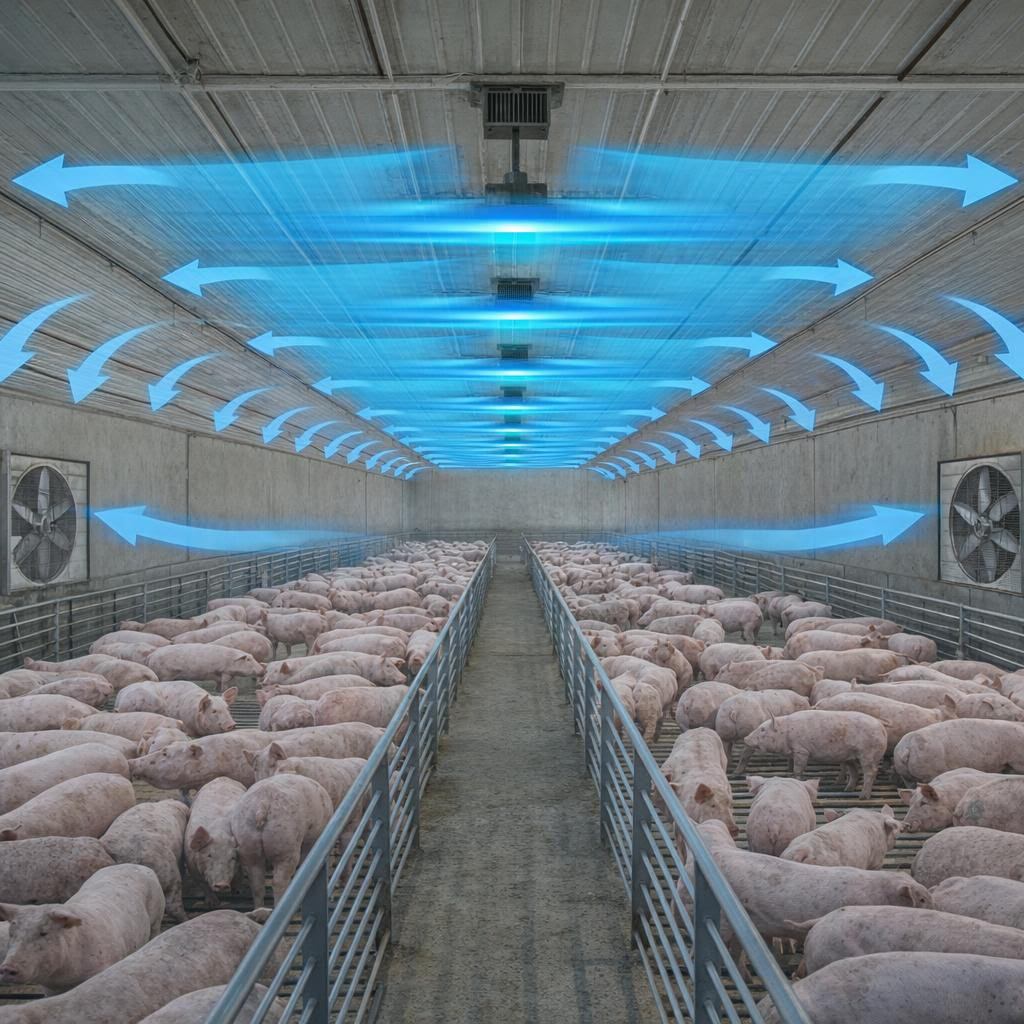
- Housing areas — M5 upper-air units mounted at minimum 10-foot ceiling height, spaced roughly every 20 feet for continuous coverage.
- Personnel and supply entry — treatment in entry zones reduces pathogen ingress on staff, clothing, tools, and small equipment.
- High-risk transitions — loading docks, feed-prep areas, and processing zones where outside material meets the herd.
Swine Brochure
Download the full case to bring to your vet or owner: the airborne threat, how UVC stacks up against filtration and fogging, and how units lay out in a barn.
POULTRY & TURKEY
Built for poultry and turkey houses.
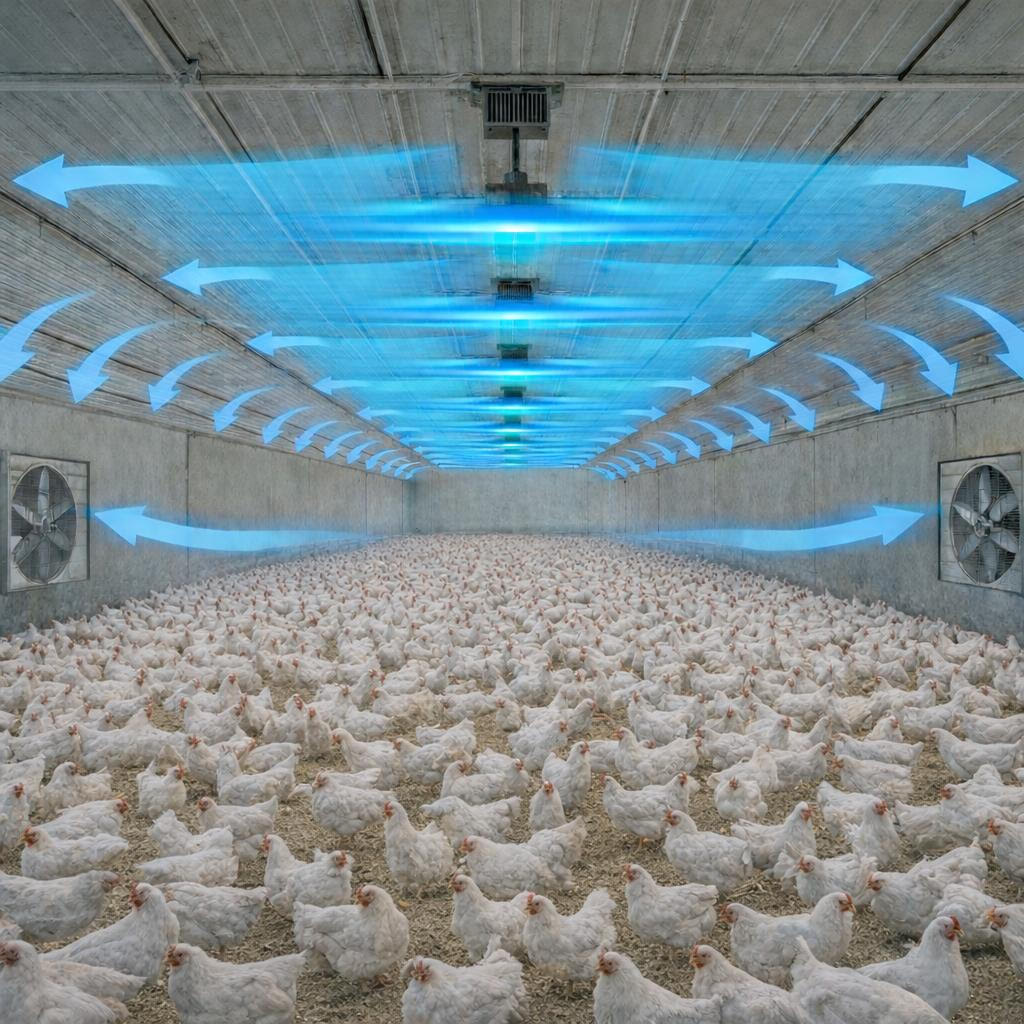
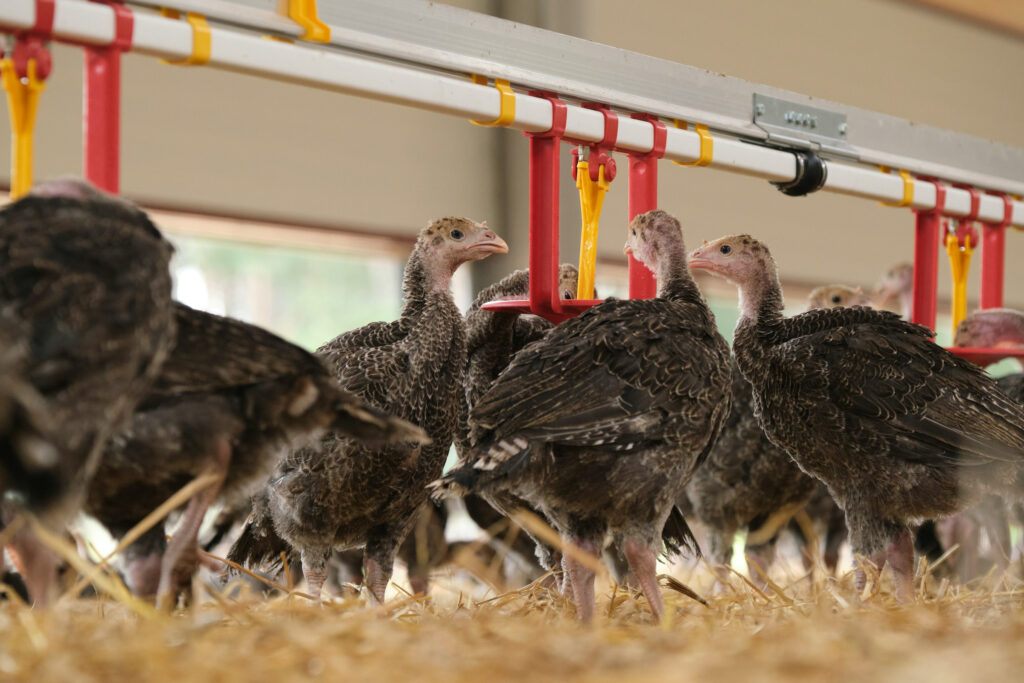
HPAI alone has driven the loss of more than 100 million U.S. birds since 2022. UVC air sanitization reduces airborne pathogen load continuously — supporting tighter biosecurity and antibiotic stewardship at the same time.
Which airborne diseases threaten poultry and turkey flocks?
- HPAI — 100M+ U.S. birds culled since 2022 (USDA APHIS); ongoing detections in commercial and backyard flocks.
- Newcastle disease — highly contagious, severe productivity and mortality impact, airborne transmission in dense housing
- Avian metapneumovirus and mycoplasma — chronic respiratory pressure that drags FCR and uniformity.
- Routine respiratory pathogens —high stocking densities and continuous dust/dander circulation keep pressure constant.
Where does UVC fit in a poultry or turkey house?
- Housing areas — M5 upper-air units provide continuous treatment in broiler, layer, breeder, and turkey operations.
- Entry and equipment zones — incoming staff, vehicles, and equipment carry the highest pathogen risk.
- Continuous-operation barns — layer and breeder houses where downtime isn’t an option benefit most from a 24/7 layer
How does UVC support antibiotic stewardship?
Reducing airborne pathogen load reduces antibiotic pressure—increasingly important as processors and consumers tighten requirements. UVC complements ABF and NAE programs without adding chemicals or labor.
Poultry & Turkey Brochure
Download the full case to bring to your vet or owner: the airborne threat, how UVC stacks up against filtration and fogging, and how units lay out in a barn.
WHY BIOSECURE PROTECTION
Engineered for the realities of animal production.
Most UVC products are designed for hospital cleanrooms or office spaces—not for the inside of a barn. BioSecure Protection engineers UVC air sanitization for the conditions you actually run in: heavy ventilation, ammonia, dust, washdowns, and continuous operation where the facility can’t go offline.
Built for harsh environments
IP54-rated housings, ammonia-resistant materials, and a washdown-rated M5 designed to hold up to ag use day in, day out. Not a healthcare unit pressed into farm duty.
Continuous and chemical-free
Runs 24/7 with animals and staff present. No fogging cycles, no depopulation, no chemical residue on equipment or feed lines. The UVC stays sealed inside the housing — air passes through the chamber and returns to the room treated.
Measurable ROI
Lower mortality, better feed conversion, fewer outbreak insurance gaps. The math depends on your operation; we’ll work it through with you in a facility assessment.
Ready to Protect Your Facility?
Walk us through your operation and we’ll map a deployment that makes sense for your buildings, ventilation, and biosecurity protocols.