
HUMAN HEALTH
Clean air for the spaces where care happens.
From hospital corridors to classroom hallways, BioSecure’s UVC units run continuously—cutting airborne pathogen load while patients, residents, students, and staff stay protected by design.
THE PROBLEM
Airborne pathogens move faster than the cleaning cart.
In hospitals, long-term care facilities, and schools, respiratory pathogens travel on aerosols small enough to drift past surface cleaning and circulate through shared HVAC for hours. Once they’re in the air, traditional infection control—wipe-downs, hand hygiene, isolation protocols, manual disinfection—has limited tools to neutralize them in real time. UVC at 254nm inactivates pathogens in the air, continuously, when properly installed for occupied spaces.
1 in 31
US hospital patients with at least one healthcare-associated infection on any given day (CDC)
1 in 43
US nursing home residents with at least one healthcare-associated infection on any given day (CDC)
22–38M
US influenza illnesses in a typical season (CDC FluView)
Jump to Hospitals & Clinics • Long-Term Care • Schools & Public Spaces
HOSPITALS & CLINICS
Built for the places where infection control can’t take a break.
Healthcare-associated infections remain a persistent challenge despite decades of progress in clinical infection prevention—and the pathogens involved are often resistant to first-line treatments. Continuous UVC at 254nm adds an environmental layer that operates while patients, staff, and visitors are present, supporting the protocols you already have rather than replacing them.
Which airborne pathogens threaten hospital environments?
- Healthcare-associated infections (HAIs) — an estimated 687,000 HAIs in U.S. acute care hospitals annually; about 72,000 patients with HAIs die during their hospitalization (CDC).
- C. difficile — leading cause of healthcare-associated diarrhea; spores persist on surfaces and aerosolize during cleaning, bedding changes, and patient movement.
- Influenza, RSV, SARS-CoV-2 — seasonal respiratory load that compounds risk for patients already immunocompromised, post-surgical, or elderly.
- MRSA and other antibiotic-resistant organisms — environmental persistence is a documented transmission pathway; reducing airborne and surface bioburden reduces opportunity for spread.
Where does UVC fit in a hospital?
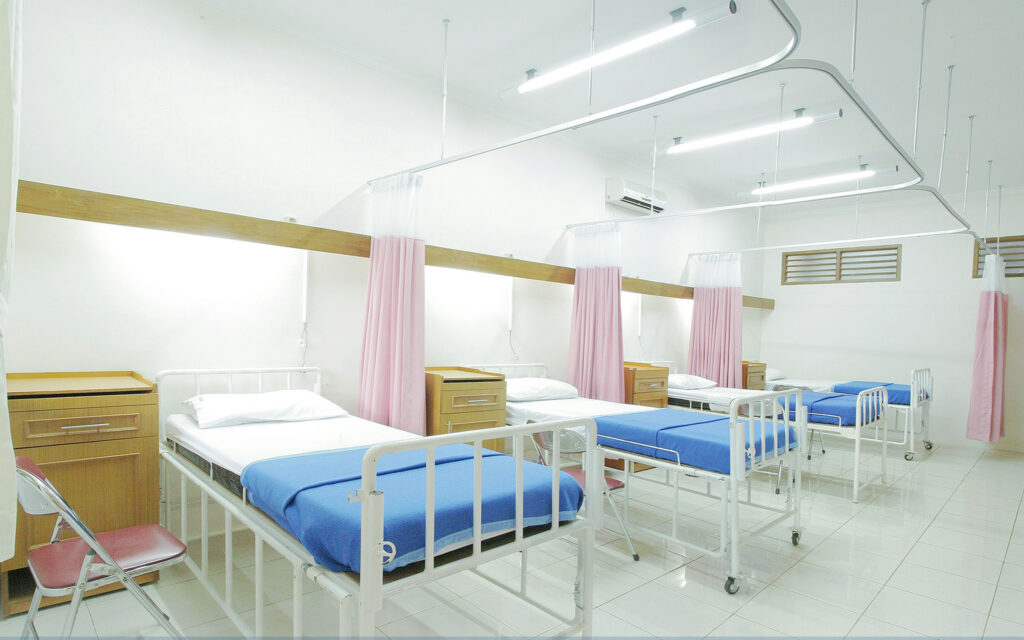
- Patient rooms — upper-air shielded fixtures provide continuous treatment while rooms are occupied; rooms-empty mode for terminal cleaning between patients.
- Hallways, corridors, and waiting areas — high-traffic zones where patients, families, and staff intersect at the highest density.
- Nursing stations and shared workspaces — collaborative areas with constant turnover, shared surfaces, and continuous occupancy across shifts.
- Shared HVAC systems — in-duct units treat air invisibly as it cycles through the building, complementing room-level treatment.
LONG-TERM CARE
Built for facilities where residents and care are inseparable.
Long-term care facilities carry a high infection burden. Residents share dining rooms, hallways, and HVAC for months or years at a time, and outbreaks move quickly through the population once they take hold. UVC air treatment runs continuously without disrupting the daily life or routines that residents depend on.
Which pathogens threaten long-term care residents?
- Influenza and RSV — outbreaks in LTC commonly affect residents and staff simultaneously, straining already-thin staffing during peak season.
- COVID-19 — LTC facilities accounted for an outsized share of pandemic deaths and remain a high-risk setting for severe outcomes.
- Norovirus — approximately 35% of CDC-reported norovirus outbreaks occur in long-term care settings; airborne spread during vomiting events is documented.
- Pneumonia — the leading infection-related cause of hospitalization from LTC, with feeding-tube residents at highest risk.
Where does UVC fit in a long-term care facility?
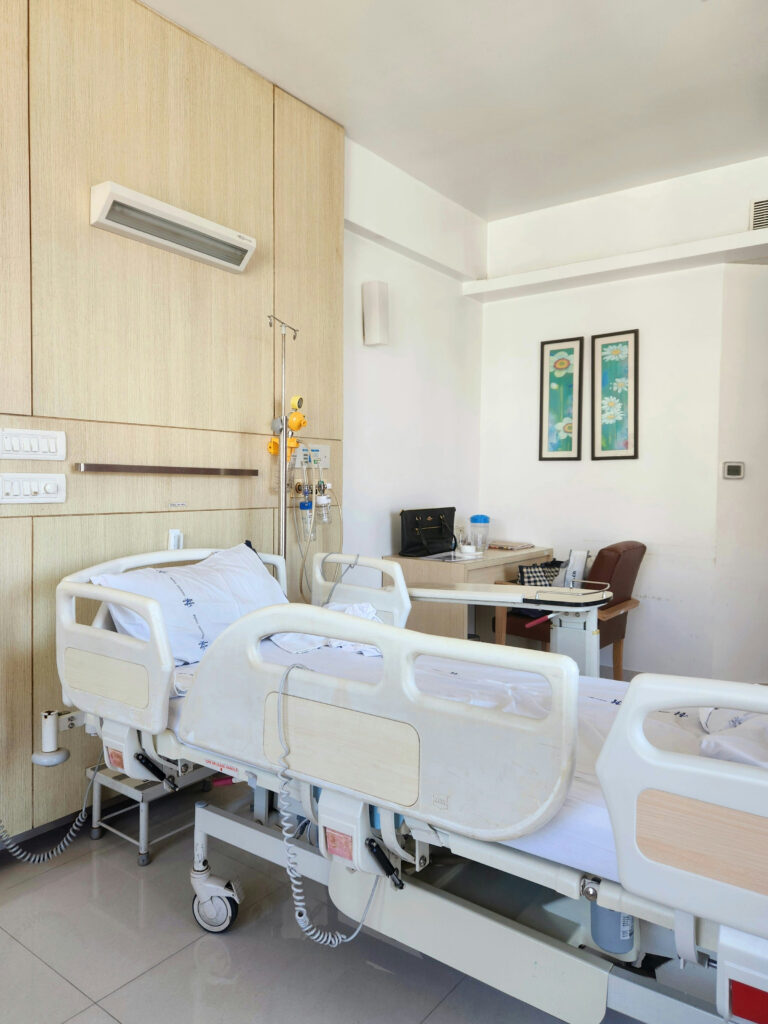
- Resident rooms — upper-air units treat the breathing zone without disturbing personal space, sleep, or routines.
- Common rooms — dining rooms, lounges, and activity rooms where social interaction concentrates risk.
- Hallways and nursing stations — staff and visitor traffic moves pathogens between resident rooms throughout the day.
- HVAC systems — in-duct treatment for buildings with central air handling.
How does UVC support staffing thin operations?
LTC facilities are perennially short on infection-prevention staff and EVS hours. UVC operates continuously without adding tasks to anyone’s schedule—no spraying, no fogging, no rotating products. Lamps are replaced annually; the system runs the rest of the year unattended. It’s protection that doesn’t compete with the rest of the workload.
SCHOOLS & PUBLIC SPACES
Built for buildings where attendance is the goal.
Respiratory illnesses drive a large share of student and staff absences every winter, and chronic absenteeism has measurable downstream effects on learning outcomes and district funding. Continuous UVC reduces airborne pathogen load throughout the school day, complementing ventilation upgrades and existing cleaning protocols without adding chemicals or labor.
Which pathogens drive school absenteeism?
- Influenza — 22–38 million US illnesses in a typical season (CDC); school-aged children carry substantial disease load and pass it through households and into workplaces.
- RSV — significant burden in pre-K and elementary populations, with downstream impact on caregiver work absences.
- SARS-CoV-2 — continues to circulate seasonally; outbreaks still disrupt classrooms and trigger staffing crunches.
- Common cold viruses — rhinovirus and seasonal coronaviruses produce high cumulative attendance impact across the school year.

Where does UVC fit in a school?
- Classrooms — upper-air units mounted above shoulder height treat the breathing zone during instruction.
- Hallways during passing periods — short, repeated bursts of high-density transmission risk between classes.
- Cafeterias, gyms, and libraries — common areas where students from multiple classrooms and grades mix throughout the day.
- Shared HVAC — in-duct fixtures treat air centrally for buildings with unit ventilators or central systems.
WHY BIOSECURE PROTECTION
Engineered for occupied spaces with people in mind.
UVC at 254nm is powerful, and that power has to be managed properly to keep occupants safe. BioSecure’s units are designed for the way buildings actually run—with people in them, around the clock, doing their work—not for ideal-condition lab settings.
People-safe by design
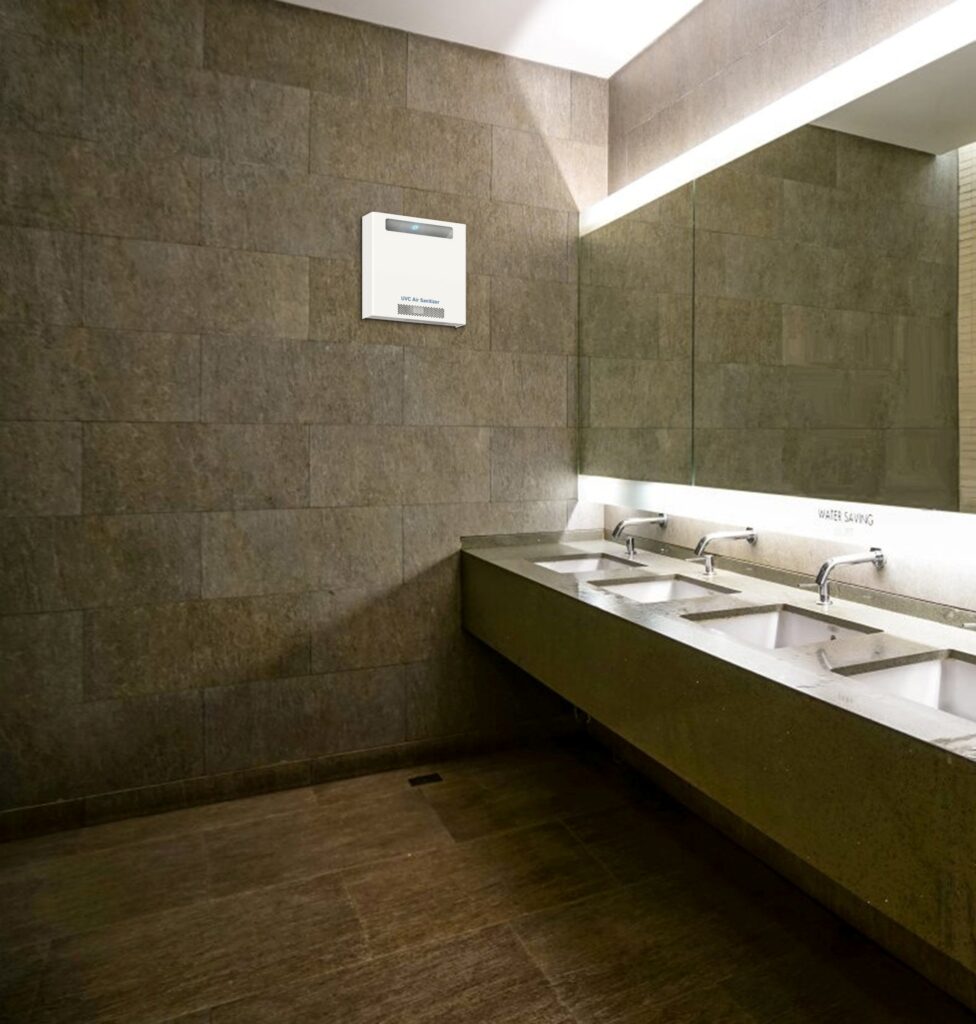
Upper-air shielded fixtures keep the UV beam in a controlled volume above the breathing zone. In-duct units treat air invisibly inside HVAC systems where occupants never encounter it. Mobile or fixed rooms-empty units handle high-dose decontamination outside occupancy. Staff and occupants are protected by engineering, not by trust.
Continuous and chemical-free
Runs 24/7 with people present when properly installed. No fogging cycles, no chemical residues, no off-gassing. Treatment doesn’t interfere with patient care, classroom instruction, resident routines, or daily workflow.
Built for facility realities
Long-life lamps designed for 24/7 duty cycles. Annual maintenance; no daily intervention. Designed to integrate with existing HVAC and infection-control protocols, not replace them.
Ready to add a layer of protection?
Walk us through your facility, and we’ll map a deployment that makes sense for your spaces, your occupants, and the infection-control program you already have in place