Why Air Sanitization Matters—and Why UVC Works
Airborne pathogens move through facilities faster than anyone wants to admit. Filtration helps at the perimeter; ventilation dilutes; chemicals require empty rooms. UVC is different: It continuously inactivates the virus in the air while people and animals are present.
Below: the disease threat, why current methods fall short, how UVC works, and the published evidence behind it.
THE PROBLEM
Airborne Disease Is the Threat Filtration Can’t Catch
In any high-density environment—animal confinement, hospital, school, eldercare—viruses travel on aerosols small enough to drift past filter banks and circulate for hours. Once a pathogen is inside the building, traditional biosecurity has limited tools to neutralize it.
The cost is measurable
$1.2B
yearly PRRSV losses to US swine producers (2016–2020)
100M+
birds culled in the US since 2022 due to HPAI outbreaks
1 in 31
US hospital patients has a healthcare-associated infection on any given day—pneumonia is the #1 type
The pathogens that matter
Different industries face different threats, but the airborne transmission mechanism is shared.
- Swine: PRRSV, PEDV, IAV-S (swine flu), ASF, FMDV
- Poultry: HPAI (avian influenza), Newcastle disease, infectious bronchitis
- Healthcare: SARS-CoV-2, influenza, tuberculosis, MRSA in surgical settings
- Schools and public spaces: respiratory viruses (RSV, influenza, rhinovirus)
THE GAP
HEPA, Chemicals, and Ventilation Each Leave a Hole
Every conventional approach has a real role to play. None of them, individually or together, solves the problem of pathogens already circulating inside an occupied space.
HEPA Filtration
Captures particles at the filter face but does nothing to neutralize pathogens elsewhere in the room. Filters require costly replacement cycles, can become contaminated, and rely on negative-pressure architecture that not all facilities have.
Chemical Disinfection
Effective on surfaces, but requires evacuating the space — humans and animals out, application, dwell time, ventilation, re-entry. Can’t run while operations are active. Residues are an issue around food production and sensitive equipment.
Increased Ventilation
Dilutes airborne pathogens but doesn’t kill them. Works only as fast as the air-exchange rate allows, and pushes contaminated air outside without addressing it. Energy-intensive in heated or cooled facilities.
The critical gap
Once a viral particle is suspended in the air of an occupied space, traditional methods leave it there until it lands on something or someone, or until ventilation eventually moves it out. That’s the gap UVC closes.
THE MECHANISM
How Does UVC Light Kill Viruses?
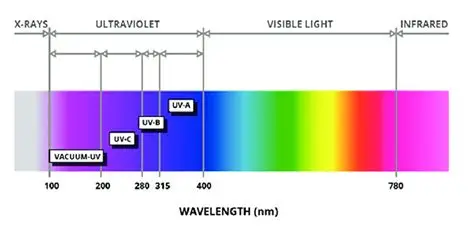
UVC is a band of ultraviolet light between 200 and 280 nanometers. At these wavelengths, the energy in each photon is enough to break the molecular bonds in microbial DNA and RNA — specifically, by forming pyrimidine dimers that prevent the pathogen from replicating.
A virus that can’t replicate is, functionally, a dead virus. It can’t infect a cell, can’t propagate through a herd or a hospital ward, can’t spread.
Which UVC wavelengths matter?
Not all UVC is equally germicidal. The peak of UVC’s effectiveness against most pathogens is at 254nm — which is also the wavelength produced most efficiently by low-pressure mercury lamps, the workhorse of germicidal UV for over half a century.
- 254 nm—the conventional germicidal peak. Decades of validated research. Used in BioSecure Protection’s products
- 222 nm (“far-UVC”)—emerging technology. Early research suggests it can be safely used in occupied spaces because the wavelength doesn’t penetrate the outer layers of skin or eye tissue. Promising but still being validated for long-term occupational exposure.
- 265-275 nm—the range of newer UVC LEDs, which trade some efficiency for solid-state durability and instant-on operation.
How is UVC made safe around people and animals?
Direct exposure to 254nm UVC is harmful to skin and eyes—there’s no debate about that. The engineering question is how to deliver the germicidal effect without exposing occupants. Two approaches dominate:
- Upper-air installation: UVC fixtures positioned above human and animal head height, sanitizing air that rises and circulates through the upper layer. Air gets treated; occupants don’t get exposed.
- Enclosed in-fixture sanitization: UVC contained within a sealed unit that draws air through, treats it, and returns it to the room. The light never leaves the housing.
Both approaches are how BSP’s product line operates—when installed and operated as designed, the UVC light never reaches occupants. Detail on each design is on the individual product pages.
THE RESEARCH
What Does the Published Research Show?
A Columbia University study published in Scientific Reports (Buonanno et al., 2024) found that 222nm far-UVC light reduced infectious airborne murine norovirus by 99.8% (95% CI: 98.2–99.9%) in an occupied real-world room—a 412-fold reduction.
The study tested four ceiling-mounted 222nm fixtures in an animal-care facility’s mouse-cage cleaning room. Murine norovirus was used as a conservative surrogate for airborne human viruses, including influenza A and coronavirus. The reduction exceeded what conventional filtration and ventilation could achieve.
The Columbia work used 222nm far-UVC, which is a different (and newer) part of the UVC spectrum than the 254nm wavelength used in BSP’s primary products. The mechanism—disrupting microbial RNA—is the same. The 254nm wavelength has decades of additional validation in healthcare and laboratory contexts as the conventional germicidal standard.
Buonanno, M., Kleiman, N.J., Welch, D. et al. “222 nm far-UVC light markedly reduces the level of infectious airborne virus in an occupied room.” Scientific Reports 14, 6722 (2024). DOI: 10.1038/s41598-024-57441-z
What about 254nm specifically?
Researchers at Boston University’s National Emerging Infectious Diseases Laboratories tested 254nm UVC against SARS-CoV-2 directly. A dose of just 5 mJ/cm² inactivated 99% of the virus in 6 seconds. A 22 mJ/cm² dose achieved a 99.9999% reduction in 25 seconds—a six-log reduction.
The work was published in Scientific Reports in December 2020 and is one of the most-cited validations of 254nm UVC for airborne and surface decontamination. It establishes the wavelength used in BSP’s products as both effective and dose-efficient against the kinds of respiratory viruses that move through hospital wards, schools, and animal facilities alike.
254nm UVC has a longer track record than far-UVC: The wavelength has been deployed in healthcare and laboratory settings for over 40 years, with hundreds of validated dose-response curves in the published literature for everything from influenza A and tuberculosis to bacterial spores.
Storm, N., McKay, L.G.A., Downs, S.N., Johnson, R.I., Birru, D., de Samber, M., Willaert, W., Cennini, G., Griffiths, A. “Rapid and complete inactivation of SARS-CoV-2 by ultraviolet-C irradiation.” Scientific Reports 10, 22421 (2020). DOI: 10.1038/s41598-020-79600-8
SIDE BY SIDE
UVC vs. HEPA vs. Chemical Fogging
Feature
BioSecure UVC
HEPA Filters
Chemical Fogging
24/7 active protection
✓
✓
✘
Neutralizes pathogens
✓
✘
✓
Treats internal air
✓
✘
✘
Low-cost consumables
✓
✘
✘
Safe with occupants present
✓
✓
✘
Low maintenance
✓
✘
✘
Annual operating cost
Low
High
High
UV bulbs in BSP’s products operate for ~9,000 hours (approximately one year of continuous use) and cost less than $20 to replace.
APPLICATIONS
Where Is UVC Air Sanitization Deployed?
UVC’s core mechanism is the same in any environment—but the engineering of the unit varies by what the space demands. BSP’s product line covers the major deployment categories.
Animal Confinement Facilities
Swine barns, poultry houses, and turkey grow-out facilities are harsh environments — high humidity, ammonia, regular wash-downs. Equipment has to survive what would destroy off-the-shelf UVC fixtures. BSP’s heavy-duty units are sealed to IP54 standards, use a quartz sleeve to protect electronics, and are designed for upper-air sanitization above the animal zone.
Hospitals, Clinics, and Eldercare
Healthcare environments need continuous air sanitization that doesn’t disrupt operations or expose patients. Drop-ceiling 2×2 panel units integrate into existing fluorescent troffer layouts; ADA wall-mount units serve restrooms and small spaces.
Schools, Offices, and Public Spaces
Classrooms, daycare facilities, and offices benefit from the same drop-ceiling and wall-mount units that work in healthcare—quietly running, requiring minimal maintenance, fitting standard ceiling grids.
ENGINEERING
Built for the Spaces that Punish Equipment
A lot of UVC fixtures work fine in a clean office. Few survive a swine barn’s annual washdown cycle, an HPAI biosecurity protocol, or a decade of continuous run-time. BSP’s units are engineered for the harder environments first, which means they’re more than enough for the easier ones.
IP54-sealed against water and dust
Quartz sleeve and gasket seals protect the electronics and bulb housing from washdowns, high humidity, and ammonia exposure typical of animal confinement.
Quartz, not standard glass
Quartz transmits UVC at full intensity. Standard glass blocks UVC and would render the unit useless. The quartz sleeve also adds physical protection without performance loss.
Designed simple, priced for facility-wide deployment
The newest M5 unit removes the fan, drops to a single bulb, and eliminates 75% of the electronics found in earlier designs. Result: a sub-$1,000 list price for a unit that previously listed at $2,499. Heavy-duty performance at a price that makes sense for protecting an entire building, not just one room.
Patents granted and pending
US patents granted; international patents pending. The engineering is proprietary, validated, and not a hobbyist build.
Questions
If you have any questions about BioSecure Protection products, please contact us.